Source pu swivel caster wheel for Wheelbarrow, Tool Car, and Cleaning
Find and compare pu swivel caster wheel options from verified suppliers. Browse 30 listings with varying sizes, materials, and customization features to match your industrial needs.
Key considerations
Products List


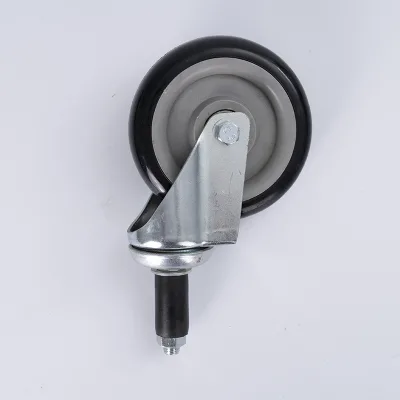


Comprehensive Sourcing Guide
Strategic Sourcing Guide for PU Swivel Caster Wheels
Navigating the global market for polyurethane (PU) swivel caster wheels requires a disciplined approach that balances material science, application requirements, and rigorous supplier verification. For procurement professionals, the core keyword "pu swivel caster wheel" represents a critical component in material handling, industrial automation, and logistics infrastructure. Unlike standard rubber or nylon alternatives, PU casters offer a distinct combination of load-bearing capacity, floor protection, and resistance to harsh chemicals. This guide synthesizes available market data and technical realities to provide a framework for evaluating suppliers and selecting the correct hardware for specific operational needs.
Technical Specifications and Material Composition
The foundation of any successful procurement strategy lies in a precise understanding of the technical specifications. The material composition is the primary differentiator in this category. While some products in the market utilize Steel (SPCC) for the hub or frame, the wheel itself is often defined by its elastomeric properties. In the observed market, PU (Polyurethane) and TPU (Thermoplastic Polyurethane) are the dominant materials cited for wheel construction. These materials are selected for their ability to withstand significant loads while maintaining a low coefficient of friction on sensitive flooring.
When evaluating a product listing, buyers must verify the specific wheel size and thickness. Market data indicates a wide range of available dimensions, with common specifications including wheel sizes from 1.5 inches up to 8 inches. Specific product models have been observed with thicknesses around 50mm, though this is not a universal standard. The swivel mechanism itself is often integrated with a rotating wheel design, allowing for omnidirectional movement. Crucially, the braking capability is a variable attribute; some units are supplied with brakes, while others are designed without them. Procurement teams must explicitly define this requirement, as the inclusion of a brake mechanism significantly alters the cost structure and mechanical complexity of the unit.
Furthermore, the operating temperature range is a critical technical constraint. High-performance PU casters are engineered to function within a broad thermal envelope, typically cited between -40°C and 140°C. This range ensures reliability in environments ranging from cold storage facilities to hot industrial processing zones. Buyers should also note the surface treatment processes, such as zinc plating, which are often applied to the metal components of the caster to prevent corrosion. The presence of UV resistance, oil resistance, and heat resistance are standard features expected in high-quality PU casters, ensuring longevity in demanding environments.
Compliance, Standards, and Certification Verification
In the B2B sector, compliance is not merely a formality but a risk mitigation strategy. When sourcing PU swivel caster wheels, buyers must scrutinize the standards to which the products are manufactured. While specific international certifications are not universally guaranteed for every listing, certain regional and industry standards serve as benchmarks for quality. Observed product data references standards such as EN (European Norms) and GB (Guobiao, Chinese National Standards). These standards provide a framework for testing mechanical strength, load ratings, and dimensional accuracy.
Buyers should verify that the supplier can provide documentation confirming adherence to these standards. It is essential to distinguish between a product that claims to meet a standard and one that has been independently tested and certified. For instance, while a product might be listed with a standard of "4" to 8" PU caster," this description often refers to the size range rather than a specific certification body. Procurement teams must request test reports that validate the load capacity and durability claims against the stated EN or GB standards.
Additionally, the origin of the product plays a role in compliance. Many PU casters are manufactured in Qingdao, China, a major hub for metal fabrication and hardware. While this location offers competitive pricing and manufacturing scale, it necessitates a rigorous verification of the supplier's quality management systems. Buyers should ensure that the supplier's production facilities adhere to international quality protocols, even if the specific certification (such as ISO 9001) is not explicitly listed in the initial product summary. The absence of a specific certification claim in a product description should not be interpreted as a lack of compliance, but rather as a prompt to request formal documentation before placing an order.
Cost Drivers and Pricing Dynamics
Understanding the cost drivers for PU swivel caster wheels is essential for budgeting and negotiation. The observed price range in the market spans from $0.01 to $15.07 per unit, a variance that reflects differences in size, material grade, customization, and order volume. The primary cost driver is the material itself; TPU and high-grade PU compounds are more expensive than standard rubber or nylon alternatives due to their superior performance characteristics.
Order volume is another significant factor influencing the final price. The Minimum Order Quantity (MOQ) varies widely, with observed ranges from 1 unit to 20,000 units. A standard MOQ of 1,000 pieces is common for custom orders, but suppliers may offer lower quantities for stock items. Buyers should anticipate that unit costs will decrease as order volumes increase, provided the supplier has the capacity to meet the demand. Customization is a major cost multiplier. Products marked as "Customized" or offering "Customization Available" will typically command a higher price due to the setup costs for tooling and the complexity of the machining process, such as CNC stamping.
Other cost factors include surface treatments and packaging. Zinc plating adds a layer of corrosion protection but increases the manufacturing cost. Similarly, specialized packaging requirements, such as inner PP bags, carton boxes, and pallets, or plywood boxes for heavy-duty units, will impact the total landed cost. Buyers must also consider the logistics of shipping from the origin, which is often China, to their destination. While the unit price is critical, the total cost of ownership must include freight, duties, and potential inventory holding costs.
Typical Applications and Operational Environments
The versatility of PU swivel caster wheels makes them suitable for a diverse array of applications. The observed market data highlights specific use cases, including wheelbarrows, unicycles, tool carts, and cleaning equipment. However, the utility of these casters extends far beyond these examples. In industrial settings, they are frequently used on heavy machinery, assembly line carts, and medical equipment where floor protection is paramount.
The application environment dictates the specific requirements for the caster. For instance, in environments where oil and chemical exposure are common, the oil resistance of the PU material is a critical feature. Similarly, in facilities with high heat, the heat resistance of the wheel becomes the deciding factor. The color of the caster, which can range from black and grey to multi-colored or purplish red, often serves a functional purpose in safety and organization. Multi-colored units may be used to designate specific zones or equipment types, while black units are often chosen for their ability to hide dirt and wear.
The choice between a swivel and a rigid caster is also application-dependent. Swivel casters provide maneuverability, making them ideal for tight spaces and frequent direction changes. However, they require a braking mechanism to prevent unwanted movement when the load is stationary. Buyers must match the caster type to the operational workflow, ensuring that the selected hardware supports the intended movement patterns without compromising safety or efficiency.
Supplier Evaluation and Quality Control
Evaluating a supplier for PU swivel caster wheels requires a multi-faceted approach that goes beyond price comparison. The manufacturing process is a key indicator of quality. Suppliers utilizing CNC stamping for metal fabrication demonstrate a commitment to precision and consistency. This method allows for tight tolerances in the wheel hub and fork, which are essential for smooth rotation and load distribution.
Quality control should be a central component of the supplier selection process. Buyers should inquire about the supplier's inspection protocols, including incoming material checks, in-process monitoring, and final product testing. The presence of specific keywords such as "Metal Fabrication Parts" and "Custom Metal Fabrication" suggests that the supplier has the capability to handle complex orders, but this capability must be validated through site audits or third-party quality reports.
When assessing a supplier, look for evidence of their ability to handle customization. The market shows a strong trend toward customized solutions, with many suppliers offering tailored specifications for wheel size, color, and braking systems. A supplier that can demonstrate flexibility in meeting these custom requirements while maintaining consistent quality is a valuable partner. Additionally, the packaging method can be an indicator of care in handling. Suppliers who use robust packaging solutions, such as plywood boxes or reinforced cartons, are less likely to have products arrive damaged.
Long-Term Procurement Considerations
Sourcing PU swivel caster wheels is not a one-time transaction but a long-term relationship that impacts operational efficiency. Buyers should consider the lifecycle of the product and the supplier's ability to support it over time. The durability of the PU material is a key factor in this regard. High-quality PU casters offer a longer service life compared to traditional rubber wheels, reducing the frequency of replacement and the associated downtime.
Supply chain resilience is another critical consideration. The observed MOQs and lead times can vary significantly, and buyers must ensure that their suppliers can scale production to meet fluctuating demand. Suppliers located in major manufacturing hubs like Qingdao often have the capacity to handle large volumes, but communication and logistics coordination are essential to prevent delays.
Finally, buyers should plan for future customization needs. As operational requirements evolve, the ability to modify caster specifications—such as changing the wheel size from 4 inches to 6 inches or altering the braking mechanism—becomes increasingly important. A supplier that offers a broad range of customization options and maintains a flexible production line will be better positioned to support these long-term changes. By focusing on technical compatibility, compliance, and supplier reliability, procurement professionals can secure a steady supply of high-performance PU swivel caster wheels that meet the rigorous demands of modern industrial applications.
Comparative Analysis of Caster Attributes
To facilitate decision-making, the following table summarizes key attributes observed in the market for PU swivel caster wheels. This comparison highlights the variability in specifications and helps buyers identify the features most relevant to their specific needs.
| Attribute | Observed Range / Options | Relevance to Procurement |
|---|---|---|
| Wheel Material | PU, TPU, Nylon, SPCC (Hub) | Determines load capacity, floor protection, and chemical resistance. |
| Wheel Size | 1.5" to 8" (e.g., 4", 5", 6", 8") | Must match equipment weight and floor surface conditions. |
| Brake Type | With Brake, Without Brake | Critical for safety in stationary applications; affects cost. |
| Temperature Range | -40°C to 140°C | Essential for extreme environment applications. |
| Surface Treatment | Zinc Plated, Zinc Plating | Provides corrosion resistance for metal components. |
| Customization | Available, Customized | Allows for tailored solutions but may increase MOQ and cost. |
| MOQ | 1 to 20,000 units | Influences inventory strategy and unit pricing. |
| Origin | China (e.g., Qingdao) | Impacts lead time, shipping costs, and compliance verification. |
| Packing | Carton, Plywood Box, PP Bag | Affects product protection during transit and storage. |
| Standards | EN, GB, Customized | Indicates adherence to regional or international quality benchmarks. |
This table serves as a reference point for buyers to cross-reference their specific requirements against the available market data. By systematically evaluating these attributes, procurement teams can make informed decisions that align with their operational goals and budget constraints.
FAQs
What materials are used for pu swivel caster wheels?
The wheels are primarily constructed from PU or TPU materials to ensure durability and floor protection. Some models also utilize SPCC steel for the hub and frame components to support heavy loads while maintaining structural integrity.
Which temperature range can these casters withstand?
These casters are engineered to operate effectively within a temperature range of -40°C to 140°C. This broad thermal envelope ensures reliable performance in both cold storage environments and high-heat industrial processing zones.
Can I find customized pu swivel caster wheels?
Yes, customization is available for wheel size, color, and braking mechanisms to meet specific operational needs. Buyers can request tailored specifications while suppliers utilize CNC stamping to ensure precision in the custom metal fabrication process.
What is the typical minimum order quantity for these wheels?
The standard minimum order quantity is often 1000 pieces for custom orders, though some suppliers may accept lower quantities. The observed market range spans from 1 to 20000 units depending on the supplier and product configuration.
How are these caster wheels packaged for shipping?
Packaging typically includes an inner PP bag, carton box, and pallet if needed for larger orders. Heavy-duty units may be shipped in plywood boxes to ensure protection during transit from the manufacturing origin in China.
Which standards do these products comply with?
Products often adhere to EN and GB standards which provide benchmarks for mechanical strength and dimensional accuracy. Buyers should verify specific test reports to confirm that the units meet these regional and industry quality requirements.
What surface treatments are applied to the metal parts?
Zinc plating is commonly applied to the metal components to provide corrosion resistance and extend the product lifespan. This surface finish ensures the casters remain functional in environments where oil, chemicals, or moisture are present.